
A Slow-Motion Revolution
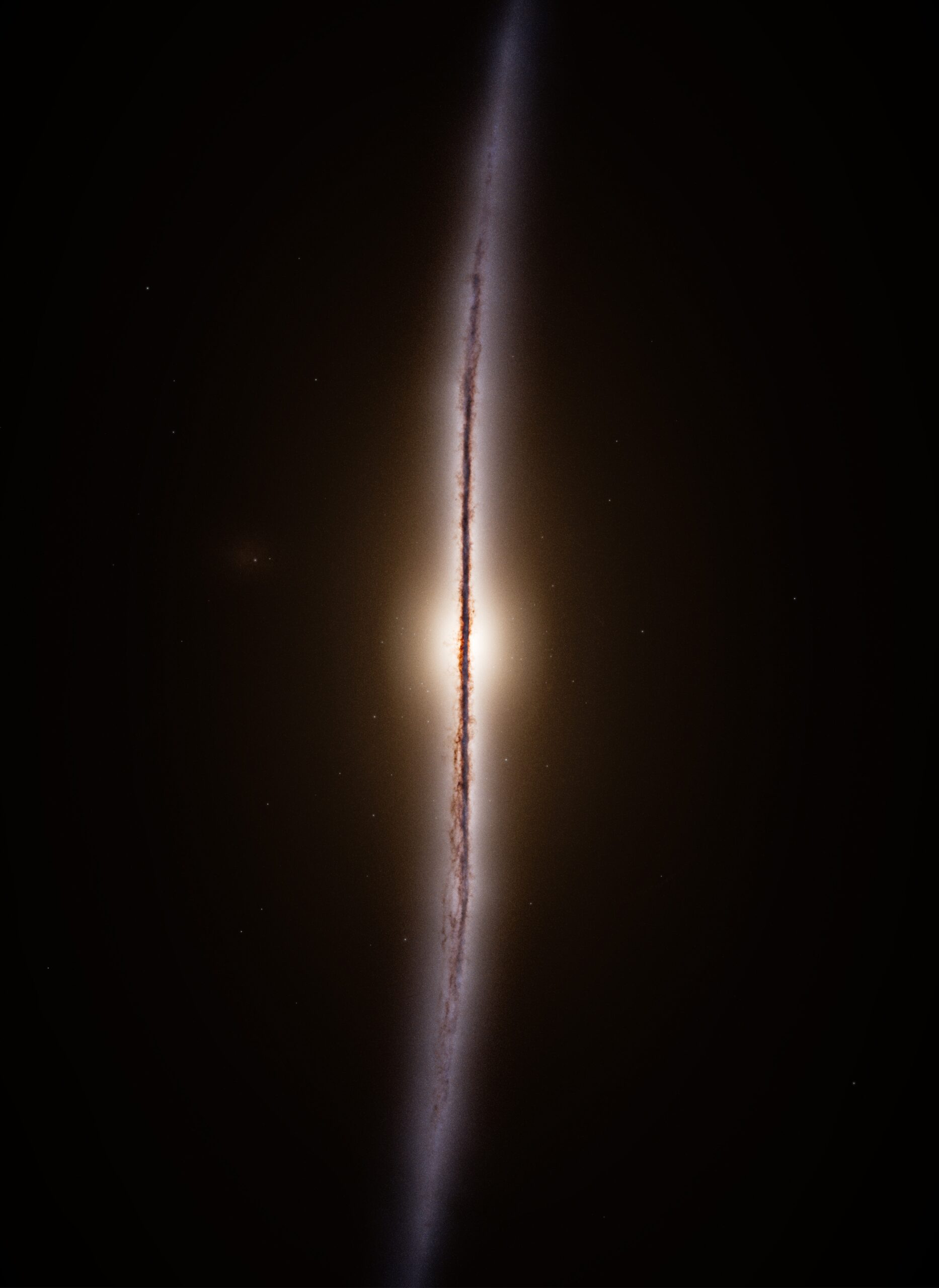
The Netherlands, Europe, Earth, Solar System, Milky Way, Universe – you may have once written your address like that on an envelope. The Milky Way is our cosmic home: a spiral galaxy of hundreds of billions of stars, with a dense core like the yolk of a fried egg. Our Solar System sits in the “white,” halfway to the edge. From above, we will never see the spiral. From our vantage point, it appears only as a milky band across the sky – rarely visible in the Netherlands, except on the darkest, clearest nights. What looks like a faint haze is actually a sea of stars. To the naked eye, they seem frozen in place. But track them carefully over years, and a slow drift becomes visible. Observing such subtle motion requires precision impossible from Earth. That is why Gaia was launched: a European satellite that mapped the Milky Way with unprecedented clarity for over a decade, until its “retirement” earlier this year.
“Everyone is a fan of Gaia,” says Amina Helmi, professor of astronomy in Groningen. “It may be the most successful and impactful ESA mission of recent years, precisely because of the sheer breadth of its discoveries. Almost every astronomer uses the data. I keep meeting new people from different fields who start talking about it – and I think: you too?” Helmi herself made one of Gaia’s most famous discoveries: among the motions of stars, she identified a group originating billions of years ago from another galaxy that collided with the Milky Way ten billion years ago. The galaxy was named Gaia-Enceladus, after the giant from Greek mythology. “With Gaia, we could read the Milky Way’s history.”
The brightest go first
Launched in 2013, Gaia had a simple mission: photograph the entire sky over and over. For ten years, the satellite observed billions of stars each month, recording their positions and colors, and tracking their motions. This created a dynamic portrait of our galaxy. Though only a fraction of all stars were observed, it was enough to provide a representative view of the Milky Way. Gaia’s measurements are now being complemented by independent velocity observations from instruments like 4MOST and MOONS on the Very Large Telescope in Chile. Where Gaia measures motion across the sky, these instruments capture how stars move toward or away from us, providing a full three-dimensional picture of stellar motion – from the largest structures to the finest details – a modern equivalent of the astrolabes used in the Middle Ages to map the heavens.
“What I love most about Gaia is that, because we measured so many stars so precisely, we can reveal subtle structures you would otherwise never see,” says Leiden astronomer Anthony Brown. He became involved with Gaia shortly after finishing his PhD in the late 1990s, initially helping to refine the mission’s scientific requirements and instruments, and later becoming a central figure in its execution. Since 2012, he has led the international Data Processing and Analysis Consortium, a team of over 400 astronomers, engineers, and project specialists handling Gaia’s complex data. “We simply couldn’t wait for the mission to finish,” Brown says. “You can’t process billions of stars at once. So we initially released the brightest, simplest stars and gradually expanded the catalog.” Several data releases followed, each more comprehensive and precise, allowing astronomers worldwide to work with the data even before the mission concluded.
Cosmic crime scene
Gaia’s main original goal was to unravel the Milky Way’s formation history. Its measurements enable “galactic archaeology,” as Helmi calls it. Not shards or ruins, but the remnants of merged galaxies leave traces in star motions. “Stars don’t collide, so their memory is preserved in how they move,” she explains. Though stars appear fixed, their orbits around the galactic center are subtly shaped by surrounding gravity. These shifts hold clues to events billions of years ago. Gaia is like dusting for fingerprints at a cosmic crime scene: stars moving slightly faster, slower, or in odd directions reveal a shared origin. Using this method, Helmi and her colleagues discovered Gaia-Enceladus, the remnants of a long-ago galactic collision.
The picture Gaia paints goes far beyond Gaia-Enceladus. Helmi now sees our galaxy differently. “The Milky Way is not an isolated island universe,” she says. Gaia shows that small neighboring galaxies constantly disturb it. “The stars feel their environment. The Milky Way as a whole isn’t in perfect balance.”
Yet this didn’t cause lasting chaos. The Milky Way remained largely calm, even as interactions with small neighbors sent subtle ripples through its disk. Take the dwarf galaxy Sagittarius: only a ten-thousandth the size of the Milky Way, but powerful enough to leave a mark. “This small galaxy could still cause something big,” Helmi says, “like David against Goliath.” Gaia data show that Sagittarius passed through the Milky Way’s disk multiple times over billions of years. Each passage compressed interstellar gas, triggering waves of star formation – a process that may have even sparked the birth of the Sun. Like David, this seemingly small galaxy shapes the dynamics of a much larger system, while the Milky Way as a whole keeps its calm character.
Helmi sees a fascinating contradiction, with implications for our own origins. On one hand, the Milky Way was shaped by countless collisions with smaller galaxies, some still causing ripples today. On the other, the last major collision – discovered by Helmi herself – occurred ten billion years ago, just three billion years after the Big Bang. Since then, the galaxy has experienced few large disruptions, explaining in part why our Solar System could form safely and life could develop.
Invisible worlds
Gaia’s versatility is evident in its discoveries. Among visible objects, hundreds of thousands of new binary stars were identified, observed systematically without favoring the most spectacular examples. This provides a fuller picture of how stars evolve in pairs. Quasars also stood out: bright points that appear solitary, but are in fact active cores of distant galaxies. Their remarkable steadiness makes them ideal reference points for mapping the 3D positions and motions of billions of other stars.
One particularly striking discovery is the so-called runaway stars studied by Mitchel Stoop. During his PhD, he focused on the Large Magellanic Cloud and found that roughly a quarter of its most massive stars escape their birth clusters at tremendous speeds. Gaia revealed dozens of new examples, some more than 100 times the Sun’s mass, moving at over 100 kilometers per second. “Runaway stars are cosmic firework rockets,” Stoop says. “They can travel hundreds of light-years before exploding as supernovae, enriching their surroundings.” His work shows that massive stars not only shape their local environment but also influence the structure and chemistry of their galaxy at great distances.
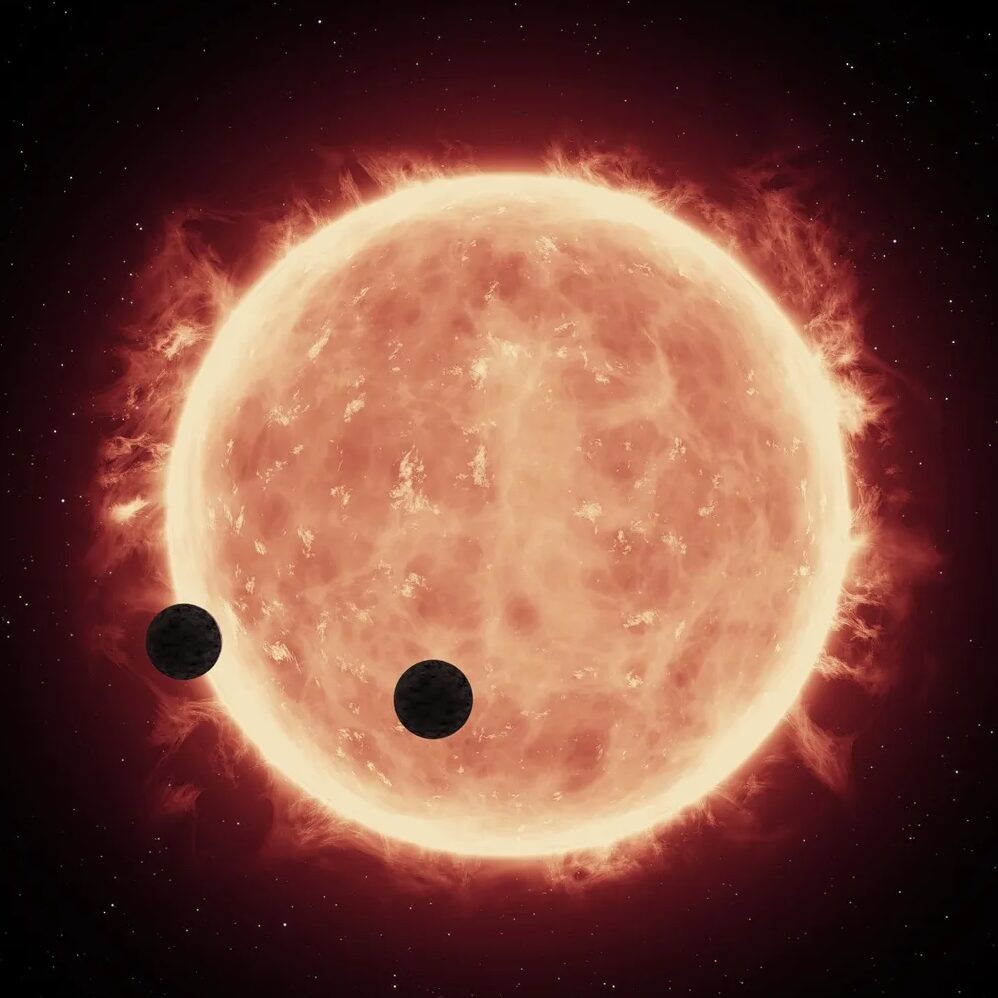
Gaia also revealed invisible worlds. Over 150,000 asteroids were tracked, and several hundred were found to have moons, doubling the known population of asteroid moons. Gaia confirmed a few exoplanets and identified thousands of candidates awaiting future confirmation. It also uncovered new black holes, including a heavy, relatively nearby class never before mapped in such detail. Crucially, Gaia provides insights into dark matter, the invisible substance that guides the motions of stars and galaxies. “Stellar streams are like fingerprints of dark matter,” says Hanneke Woudenberg, a PhD student in Helmi’s group. Her research examines the Helmi stream, the dispersed remnant of a dwarf galaxy swallowed billions of years ago. Gaia allowed many more stars to be linked to the stream, revealing that they split into two groups on different orbits, suggesting that the Milky Way is embedded in a slightly stretched dark matter halo – more like a rugby ball than a perfect sphere. “By studying visible stars, we can learn about something we cannot see directly,” Woudenberg says.
Richer portrait
A future step for Gaia is an infrared version of the mission, Gaia-NIR. “We did a detailed technical study in 2016,” says Anthony Brown. “Such an extension could measure up to 100 billion objects, including young stars hidden in dense clouds.” Infrared detectors would track stellar motion over long periods and potentially discover long-period exoplanets, opening a new dimension in planet hunting. “It would be an unprecedented addition to exoplanet discoveries so far,” Brown adds.
Gaia shows that revolutions do not always happen all at once. They can unfold slowly, over years. “Gaia is one of the most successful space missions ever,” Helmi says. “Maybe not spectacular in images, like Hubble or James Webb, but spectacular in what we learn.” As the Milky Way quietly turns, Gaia steadily builds a richer, more detailed portrait of our home galaxy – a legacy of data that will guide research for decades to come.